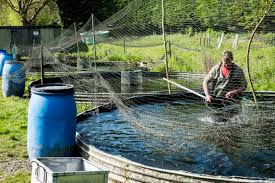
Many beginners find themselves asking, what is biofloc fish farming. It can sound a bit confusing with all the new terms. But really, it’s a smart way to raise fish that helps save water and feed.
You don’t need a huge farm to start. This guide makes it easy to understand. We will break down everything you need to know, step by step.
Get ready to see how simple it can be.
Key Takeaways
- Biofloc fish farming is a system that uses beneficial bacteria to create a food source.
- This method significantly reduces water usage compared to traditional fish farming.
- It requires careful management of water quality parameters.
- Fish are kept in a tank where waste is converted into edible material for them.
- This approach can lead to higher stocking densities and faster growth rates.
- Biofloc farming is a sustainable and environmentally friendly way to produce fish.
What Is Biofloc Fish Farming
Biofloc fish farming is a unique aquaculture method. It helps fish thrive by using tiny living particles called bioflocs. These flocs are a mix of microorganisms like bacteria, algae, and uneaten fish food.
They float around in the water. Fish can eat these flocs, which gives them extra food. This means you don’t need to feed them as much commercial feed.
It’s like having a natural buffet for your fish.
The main goal is to turn fish waste into something useful. Fish produce ammonia and other waste products. In a biofloc system, good bacteria eat this waste.
They then form the bioflocs. This keeps the water cleaner and provides nutrition. It’s a natural cycle that helps the fish grow.
How Biofloc Systems Work
A biofloc system uses tanks that are kept full of water. Aeration is very important. This means adding air bubbles to the water constantly.
The aeration mixes the water. It also keeps the bioflocs floating and helps the bacteria breathe. A constant flow of air also helps keep the fish healthy.
The system starts with a small amount of fish feed. As the fish eat and grow, they produce waste. This waste has nitrogen in it.
Special bacteria, called heterotrophic bacteria, love to eat this nitrogen. They use it to build their bodies. This process makes the bioflocs.
The more waste and feed there is, the more bioflocs can form.
Having a good amount of bioflocs in the water is key. It acts like a natural fertilizer. The bacteria use the waste from the fish.
They turn it into protein. This protein-rich floc is then eaten by the fish. This means the fish get more food from the tank itself.
This is why it’s an efficient system.
The Role of Bacteria
Bacteria are the true heroes of biofloc farming. Specifically, heterotrophic bacteria are used. These bacteria eat organic matter.
In biofloc systems, this organic matter is primarily fish waste and uneaten feed. They break down harmful compounds like ammonia. Ammonia can be toxic to fish in high concentrations.
The bacteria convert it into their own biomass.
This conversion process is vital. It helps maintain good water quality. Without these bacteria, ammonia would build up.
The fish would get sick or even die. The bacteria also help form the bioflocs themselves. They clump together with other particles.
This creates the floating masses that fish can consume.
Think of it like a tiny ecosystem in a tank. The bacteria are the cleanup crew and the food producers. They work tirelessly to keep the environment healthy for the fish.
The more diverse and active the bacterial community, the better the biofloc system will perform.
Key Water Quality Parameters
Maintaining the right water conditions is essential for biofloc success. Several factors need close monitoring. The level of dissolved oxygen must be high.
This is because the bacteria that form the bioflocs need oxygen to live and work. Good aeration is crucial for this.
Ammonia and nitrite levels should be kept very low. These are byproducts of fish waste. While the biofloc bacteria consume ammonia, spikes can still occur.
If levels rise too high, they can harm the fish. Regular testing helps catch problems early.
The amount of suspended solids, which are the bioflocs, also needs attention. Too few flocs mean less supplemental food for the fish. Too many flocs can clog fish gills or reduce oxygen.
A good target for total suspended solids is often around 200-400 mg/L.
pH is another important factor. Biofloc systems typically work best in a pH range of 7.0 to 8.5. This range supports the growth of the beneficial bacteria.
It also helps keep ammonia in its less toxic, ionized form. Temperature also plays a role. Most fish species do well in temperatures between 25-30 degrees Celsius.
Benefits of Biofloc Fish Farming
Biofloc farming offers many advantages. One of the biggest is water conservation. Traditional aquaculture can use a lot of water.
Biofloc systems recycle water. They only need small water exchanges. This is great for areas where fresh water is scarce.
It also reduces the amount of wastewater that needs to be treated.
Another major benefit is improved feed conversion. Because the fish get supplemental nutrition from the bioflocs, they eat less commercial feed. This means you save money on feed costs.
It also means fish waste is reduced further. Studies show that biofloc systems can improve feed conversion ratios significantly.
Higher stocking densities are also possible. You can raise more fish in the same amount of space. This is because the biofloc system helps manage waste and maintain water quality.
This can lead to higher production yields for fish farmers. The faster growth rates are also a plus.
Reduced Water Usage
Water is a precious resource. Traditional pond-based fish farming often involves frequent water changes. This can lead to massive water consumption.
Biofloc systems are designed to be recirculating. This means the same water is used over and over.
Small amounts of water are only added to
The reduced water exchange also means fewer nutrients are released into the environment. This helps prevent pollution. It is a more environmentally responsible way to farm fish.
Improved Feed Efficiency
The bioflocs themselves are a rich source of protein and other nutrients. When fish consume these flocs, it supplements their diet. This means they require less manufactured fish feed.
This has two main positive effects. First, it significantly reduces the cost of operation. Feed is usually the largest expense in fish farming.
Second, it means less waste is produced. When fish eat less commercial feed, they excrete less undigested material. This further reduces the load on the biofloc system and the overall waste output.
The feed conversion ratio (FCR) is a measure of how efficiently feed is converted into fish biomass. Biofloc systems often achieve better FCRs. This indicates higher efficiency.
A typical FCR might be 1.5:1, meaning it takes 1.5 kg of feed to produce 1 kg of fish. In a biofloc system, this could be reduced. This makes the farming operation more profitable and sustainable.
Higher Stocking Densities
One of the most appealing aspects of biofloc technology is its ability to support higher stocking densities. Traditional methods often face limitations due to waste accumulation and water quality degradation. In biofloc systems, the continuous conversion of waste into edible biomass helps mitigate these issues.
This allows farmers to raise more fish in a smaller volume of water. For example, a traditional pond might stock 20-50 fish per cubic meter. A biofloc system can potentially stock 100-200 fish per cubic meter, or even more depending on the species and management.
This increased density means greater productivity from a given footprint. It is especially beneficial for farmers with limited land availability. However, it also requires more diligent monitoring and management to ensure optimal conditions are maintained for the higher population.
Setting Up A Biofloc System
Starting a biofloc system involves several key steps. You need the right kind of tank. It needs to hold water well and be easy to clean.
Then, you need a good aeration system. This is crucial for keeping the bioflocs alive and the fish healthy. You also need a way to measure water quality.
Begin by setting up your tank. Add clean water. Then, start your aeration.
You will need to add a carbon source, like molasses or rice bran. This feeds the bacteria. You will also add a nitrogen source, like fish meal or even a small amount of fish food.
This kickstarts the biofloc formation.
Once the bioflocs start to form, you can add your fish. Start with a small number of fish. Monitor the water quality closely.
As the fish grow and produce more waste, the bioflocs will increase. You will need to adjust aeration and feed levels as needed.
Choosing The Right Tank
The type of tank used is important for a biofloc system. Tanks should be made of materials that are safe for aquaculture. Common choices include polyethylene, fiberglass, or concrete.
The tank should be circular or have rounded corners. This helps with water circulation and prevents waste from settling in corners.
The size of the tank will depend on how many fish you want to raise. For beginners, smaller tanks, like 500-1000 liter tanks, are a good starting point. These are easier to manage.
Larger tanks require more complex systems for aeration and waste removal.
It is also important that the tank is easy to clean. Some tanks have a cone-shaped bottom. This helps to concentrate solid waste.
This makes it easier to remove the sludge periodically. The tank needs to be strong enough to hold a large volume of water and withstand constant aeration.
Aeration Equipment
Proper aeration is absolutely critical for biofloc systems. It does two main jobs: it supplies oxygen for the fish and the beneficial bacteria, and it keeps the bioflocs suspended in the water column. Without adequate aeration, the bioflocs will settle, and the bacteria will die, leading to system failure.
Common aeration methods include using blowers and air diffusers. Blowers push air through small pores in diffusers, creating tiny bubbles. These fine bubbles provide excellent oxygen transfer.
Paddlewheel aerators are another option, especially for larger systems. They churn the water surface to increase oxygen intake.
The amount of aeration needed depends on the stocking density, feeding rate, and water temperature. A general guideline is to provide enough oxygen to keep dissolved oxygen levels above 5 mg/L at all times. It is often recommended to have backup aeration in case of power outages, as these can be disastrous for a biofloc system.
Starting The Biofloc Process
To get your biofloc system running, you need to create the right conditions for the bacteria to grow. First, fill your tank with water. You will need to add a carbon source and a nitrogen source.
A common carbon source is molasses. A common nitrogen source is fish meal or even a small amount of shrimp meal.
The ratio of carbon to nitrogen is important. A common starting ratio is around 10:1 or 15:1 for C:N. You also need to ensure there is enough oxygen.
Turn on your aerators. You will see the water start to get cloudy as the bacteria multiply. This cloudiness is the beginning of the bioflocs.
You can test for biofloc development. A simple test is to let a sample of water settle for a few minutes. The settled solids should make up a certain percentage of the volume.
Once the bioflocs are well-established, usually after a week or two, you can introduce your fish.
Adding Carbon And Nitrogen Sources
The initial seeding of the biofloc system requires a balance of carbon and nitrogen. The carbon source, like molasses or rice bran, provides energy for the heterotrophic bacteria. The nitrogen source, such as fish meal or a protein-rich ingredient, provides the building blocks for bacterial growth.
A commonly cited starting ratio for carbon to nitrogen (C:N) is between 10:1 and 20:1. For instance, if you use 100 grams of fish meal (which has a certain amount of nitrogen), you would add 1000-2000 grams of molasses (a carbon source). This ratio helps the bacteria efficiently convert waste into biomass.
It’s important to add these sources gradually. Too much at once can shock the system. You will need to monitor water quality closely during this startup phase.
As you begin feeding the fish, their waste will also contribute to the nitrogen cycle, and you may need to adjust the external carbon and nitrogen inputs accordingly.
Introducing Fish
Once your bioflocs have started to form and the water quality is stable, it is time to add your fish. It is wise to start with a low stocking density. This allows the biofloc system to adjust to the fish’s waste production.
A gradual increase in stocking density as the system matures is recommended.
Acclimate your fish properly before releasing them into the tank. This involves gradually mixing the water from their transport container with the tank water. This helps them adjust to the temperature and water chemistry.
Observe the fish closely for any signs of stress or illness. If the fish are active and feeding well, it’s a good indication that the biofloc environment is suitable. Continue to monitor water parameters regularly.
Managing A Biofloc System
Managing a biofloc system requires attention. You need to keep an eye on water quality. You also need to feed the fish appropriately.
Adjusting the system as the fish grow is important. It is a dynamic process.
Regularly check for ammonia, nitrite, and nitrate levels. Also, monitor dissolved oxygen and pH. The amount of biofloc in the water is also something to watch.
If the flocs get too dense, you might need to remove some of the solid waste. If there are not enough flocs, you may need to add more carbon or nitrogen.
Feeding is another key part of management. Feed your fish small amounts multiple times a day. Only feed what they can eat in a few minutes.
Uneaten food can quickly degrade water quality. As the fish grow, you will need to increase the amount of feed.
Monitoring Water Quality Daily
Daily monitoring is the cornerstone of successful biofloc farming. You cannot overstate its importance. Each day, you should test for key water quality parameters.
This includes dissolved oxygen (DO), pH, ammonia, and nitrite.
Dissolved oxygen should ideally be above 5 mg/L for most fish species. Low DO levels are a major threat. pH should remain in the optimal range for your fish and the bacteria, typically between 7.0 and 8.5.
Ammonia and nitrite are toxic to fish. They should be as close to zero as possible. If you detect any of these parameters going out of range, you need to take immediate action.
Monitoring allows for early detection of problems. It enables proactive adjustments before they become severe. This prevents fish loss and ensures efficient operation.
A good quality water testing kit is a necessary investment for any biofloc farmer.
Adjusting Feed And Carbon
The amount of feed given to the fish is directly linked to waste production and biofloc formation. As fish grow, their feed intake increases. This means more nitrogen waste is produced.
The biofloc system needs to be able to process this increased waste.
If the biofloc level appears low, it might mean the bacteria are lacking energy. In such cases, adding a small amount of carbon source, like molasses, can help stimulate bacterial growth and flocculation. Conversely, if bioflocs become too dense or water quality declines rapidly, it might indicate overfeeding or insufficient aeration.
It is a delicate balance. Farmers learn to “read” their tanks. They observe the color and consistency of the bioflocs, the behavior of the fish, and the water test results to make informed decisions about feeding and carbon supplementation.
Removing Solid Waste
While biofloc systems are designed to convert waste, some solid sludge will inevitably accumulate. This sludge is a mix of dead bacteria, uneaten feed, and fish feces. If not removed, it can reduce water quality and potentially harm the fish.
Removal is typically done periodically, perhaps once or twice a week, depending on the stocking density and feeding rate. The process usually involves using a siphon or a pump to draw out the settled solids from the bottom of the tank.
It is important not to remove too much solid waste at once. Some of the biofloc itself will be removed. This is unavoidable to some extent.
The goal is to remove the excess, undesirable solids while retaining enough biofloc to sustain the system. The removed sludge can sometimes be used as fertilizer for agriculture, adding another layer of sustainability.
What Fish Can Be Farmed Using Biofloc
Many different types of fish can be raised using biofloc technology. The suitability often depends on the species’ tolerance to higher stocking densities and their feeding habits. Some species adapt better than others.
Popular choices include tilapia, catfish, shrimp, and various types of carp. These species are generally hardy. They also have a good appetite for the supplemental food provided by the bioflocs.
Researching the specific needs of any chosen species is crucial for success.
Shrimp farming using biofloc is particularly common. It helps manage the sensitive water quality requirements of these crustaceans. Even some marine fish can be farmed in brackish or saltwater biofloc systems.
Tilapia In Biofloc Systems
Tilapia are one of the most widely farmed fish globally. They are well-suited for biofloc systems for several reasons. Tilapia are omnivores with a relatively high tolerance for varying water conditions.
They can effectively utilize the bioflocs as a supplemental food source.
Their robust nature allows them to thrive at higher stocking densities than many other species. This makes biofloc technology an attractive option for tilapia farmers looking to maximize production in a limited area. The consistent availability of protein from the bioflocs can also contribute to faster growth rates in tilapia.
A study in found that tilapia farmed in biofloc systems achieved a 15% higher growth rate and a 10% better feed conversion ratio compared to those in traditional pond systems. This demonstrates the practical benefits for this popular species.
Shrimp Aquaculture And Biofloc
Biofloc technology has become very popular in shrimp aquaculture. Shrimp, like Penaeus monodon (black tiger shrimp) and Litopenaeus vannamei (Pacific white shrimp), are sensitive to water quality fluctuations. They also require a consistent supply of protein.
The biofloc system helps maintain stable water quality by consuming ammonia and other organic wastes. The bioflocs themselves provide a rich source of protein for the growing shrimp, reducing reliance on costly formulated feeds. This is particularly beneficial as shrimp grow and their protein requirements increase.
Using biofloc in shrimp farms can significantly reduce the need for water exchange. This conserves water and minimizes the discharge of pollutants. It also helps create a more controlled farming environment, leading to improved survival rates and reduced disease outbreaks.
Catfish Farming With Biofloc
Catfish species, such as channel catfish, are also good candidates for biofloc cultivation. They are hardy fish, able to tolerate a range of environmental conditions. Catfish readily consume bioflocs, which can supplement their diet and improve overall feed efficiency.
The controlled environment of a biofloc system allows farmers to raise catfish at higher densities. This can increase the yield from a given area of land. The continuous removal of waste products helps prevent the build-up of harmful compounds like ammonia, which catfish can be sensitive to.
Research has shown that catfish grown in biofloc systems often exhibit faster growth rates and improved survival compared to traditional pond culture. This makes biofloc a viable and potentially more profitable method for catfish farmers.
Common Myths Debunked
Myth 1: Biofloc Farming Is Only For Large Commercial Operations
This is not true. While large farms do use biofloc, it is also very adaptable for small-scale and even backyard operations. With smaller tanks and simpler aeration systems, individuals can successfully implement biofloc farming for personal consumption or small market sales.
The principles remain the same, just scaled down.
Myth 2: Biofloc Systems Are Hard To Manage And Require Constant Attention
While biofloc systems do require regular monitoring and management, they are not necessarily more difficult than other forms of aquaculture. With proper setup, understanding of the principles, and a routine for checking water quality and feeding, the management becomes straightforward. It requires diligence, but not constant intervention.
Myth 3: Biofloc Fish Taste Bad Or Different
The taste of fish is primarily influenced by their diet and water quality. In a well-managed biofloc system, the fish have a varied diet that includes their commercial feed and the nutritious bioflocs. If water quality is maintained, the fish should taste clean and good, similar to fish from other healthy aquaculture systems.
Poor taste is usually a sign of poor management, not the biofloc method itself.
Myth 4: You Don’t Need To Feed Fish In A Biofloc System
This is a common misunderstanding. Bioflocs provide a supplemental food source, but they do not entirely replace the need for commercial fish feed. The initial bioflocs are formed from added carbon and nitrogen sources, and later from fish waste and uneaten feed.
However, to achieve optimal growth rates and ensure the fish receive all necessary nutrients, formulated feed is still essential.
Frequently Asked Questions
Question: What is the main advantage of biofloc fish farming?
Answer: The main advantage is significantly reduced water usage due to its recirculating nature, making it highly sustainable.
Question: How do bioflocs provide food for the fish?
Answer: Bioflocs are made of beneficial bacteria and other microorganisms that consume fish waste and uneaten feed, becoming a protein-rich food source that fish can eat.
Question: What equipment is essential for a biofloc system?
Answer: Essential equipment includes a tank, a reliable aeration system (like blowers and diffusers), and water quality testing kits.
Question: Can I farm any type of fish using biofloc?
Answer: While many fish species can be farmed, hardy species like tilapia, catfish, and shrimp are commonly and successfully raised in biofloc systems.
Question: How much water can a biofloc system save?
Answer: Biofloc systems can reduce water usage by up to 90% compared to traditional aquaculture methods because they recirculate water.
Summary
Biofloc fish farming is an innovative approach. It uses bacteria to create a food source for fish while cleaning the water. This method saves a lot of water and feed.
It allows for more fish in smaller spaces. Setting up and managing a system involves choosing the right tank, providing good aeration, and monitoring water quality. Many fish, like tilapia and shrimp, do well in these systems.
Understanding these basics helps you succeed with biofloc farming.